Showing posts with label Czech Republic. Show all posts

Sunday, September 2, 2018

Keep The Car Running

We have been in 5 different countries this past week. Making our way south, about to swap out our rental car, we have covered some distance but took time to play and see some things. Below is an outline of what we have done:

1. Czech Republic
We had a relatively short driving day when we departed Prague for Český Krumlov, so we took advantage of the booming Czech disc golf scene and finally used the 3 discs I have been packing around with me. The first course in Tábor was not very interesting and not well taken care off, so we weren't that upset when a thunderstorm chased us off after the 8th hole. The second course we played was in a nice city park in the town of České Budějovice. The holes were long but grassy and well designed around trees. I have missed playing.


We arrived in the late afternoon to our hotel a few kilometers west of Krumlov. Nestled in the hills at elevation with a slight drizzle, it was nice to be out of the heat of the big cities. We strolled the castle grounds and found it a little odd that they decided to paint all of the walls to make it look more ornate, like adding brick outlines and 3-D visuals to a flat surface. Apparently this was ordered by one of the rulers back in the 16th century, trying to make his residence resemble those castles in Austria, Poland, and Italy. We had just seen legit fancy castles so this one was a quick walk through, but the town itself is delightful. The narrow streets are touristy but still feel real. The meandering river is very picturesque, and our dinner along said river was enjoyable. Overall a good stop.


2. Austria
On Saturday, we said goodbye to the Czech Republic and its easy to drink beer. Our next destination was the mountains of northwest Slovenia, which lead us straight south through Austria. We briefly considered stops in Vienna or Salzburg, but knew we couldn't do them justice with our current budget. We will return to this area after we make more money and I relearn my German. For now, we just booked a stopover in the southern Austrian hills to breakup the long drive. We bought our $12 toll vignette (a sticker for your windshield that grants access to fast roads in some European countries) and cruised down the Autobahn for most of the day. The engineering and tunnels through the Alps were impressive but we paid for it with an unexpected extra $13 toll just 7kms before our exit. We also paid extra for our choice of scenic mountain drive through the Nockberge Pass with an unknown $22 entrance fee. The weather was less than ideal for a $22 mountain pass drive, but the curves were fun and the museum of fossils was impressive. The highlight was wondering if cows were going to ram our car.


Around 6pm, our map took us up the side of a hill to our hotel in a sparse mountain settlement. The reception lady spoke very little English but her greeting and tone told us something wasn't right. We eventually figured out that the actual price for our lodgings was twice what we had booked using Booking.com. She said it was a problem with the website and so we retreated back to our car to come up with a new plan (we later learned that emails had been sent to us during the day about the mixup, but we can't check it without wifi). The new plan was to drive back down the hill to bigger towns and look for "zimmer frei" signs. We drove around somewhat aimlessly and almost walked in to a retirement center, but eventually inquired at the Holiday Inn. While I half-heartedly asked about price, Julia discovered they had an open wifi signal and quickly booked us a place close by. As we drove off, we thanked the American company for their help and were relieved we wouldn't be sleeping in the car.

The last minute accommodations were a little pricey but came with free breakfast, and I can eat a lot. The reception lady greeted us with a smile and expressed concerns about our President. She is a teacher with a diverse class due to proximity to the border and reminded us that Melania is Slovenian. She said they are good, hard working people and that she thinks Melania doesn't even like Trump. For dinner that night, we ate schnitzel and roast pork, then watched a lightning storm from our room.

3. Slovenia
We spent a lot of money in Austria but also learned some lessons about planning. For example, I learned there is a tunnel on the autobahn to enter Slovenia but it requires a $9 toll to use it. I also learned that you need to purchase an expensive toll vignette to use the expressways in Slovenia but those fast roads could be easily avoided where we would be visiting. A little research saved us money as we opted to take the free Wurzenpass road across the border and once there, avoided the green expressway signs. The weather was still drizzly that day, so we drove down to Lake Bled, the top tourist site in the country, and got a little taste of its splendor.

Our lodgings were in the basement apartment of a local family we found on Airbnb and the host kindly gifted us a bottle of champagne and a decorated heart shaped gingerbread cookie in honor of our honeymoon. Julia broke open the cookie and tried a little bite. It tasted a little stale. Further inspection of the packaging stated that the "product is not food" but that it was also "not harmful". Julia began doing some research online. I tried a bite and decided it was safe to eat until Julia told me otherwise. She learned that the decorative cookies were a specialty of the area and so I quit eating it to salvage what was left. It was a very nice gesture by our host even though I feel the concept of gifting someone a cookie they are not supposed to eat is rather sadistic. Dinner that night was pizza which felt appropriate due to our proximity to Italy. The food in Slovenia seems to just take from what is all around, with pizza, schnitzel, and bureks (Bosnian). The one local specialty we did indulge in was the cream cake, or kremšnita. 


Finally the clouds parted and the next day was a beautiful sunny 75 degrees, and we spent it all on and around the lake. The setting is stunning; clear teal blue water, a church on an island in the middle, a castle on a cliff, and surrounded by mountains. We walked the shoreline path, briefly rented a rowboat, and hiked up a hill for the view. We cooked ourselves grilled cheese and tomato soup for dinner that night, something Julia had been craving for a few days since the weather turned cooler.


We had just 2 nights in Slovenia, so we had to use our time wisely. Besides the lake, the other big tourist draw is Triglav National Park which contains the Julian Alps. There is a dramatic bisecting mountain road called Vršič Pass and luckily for us it travels south, and with a little imagination, could be considered on our way to Croatia. I also convinced Julia that we had time for a short hike at the top of the pass if we got up early. It was another beautiful day as we wound up to the top of the pass and hiked for 1.5 hours to the top of Slemenova Špica. The hike was fantastic, one of the best low effort/high reward hikes I have ever done. You are surrounded by sheer cliffs and rocky points the whole time, and have amazing views down the valleys. If you are ever in the area, I highly recommend it. (FYI: there was a kid on a bike charging for parking at the top of the pass if you were staying for more than a few minutes. He had a vest and a small receipt printer, so seemed legit, plus it was only 3€.)


4. Italy
After descending down the southern slope of the Vršič Pass, we veered west toward Italy to utilize their fast expressways.  Traveling through the Friuli-Venezia Giulia wine region, I had to keep the doors locked so Julia didn't jump out. Wine tasting would have been fun, but we had just hiked up a mountain and had a good amount of driving still to do. We paid a small toll for the Italian expressway and made our way south towards the Adriatic Sea, briefly passing back through 22kms of Slovenia before crossing into Croatia. (Side note: we have enjoyed the E.U. unregulated border crossings. Entering Croatia was the first time in over 2 weeks we have had to go through immigration formalities.)

5. Croatia
Our destination was the town of Pula on the Istrian Peninsula, and a joyous return to the sea. We stayed 2 nights just outside of the town center in an apartment attached to a nice older couples house. Dinner the first night was at a popular local restaurant just a block away in a converted house in the middle of a neighborhood. They make their own pasta and grilled our pork just a few feet away from us.

When I picked this area, I was mostly thinking about the beaches, but we discovered they also have some spectacular ruins. Specifically the large Pula Arena, built between 27 BC – 68 AD, which is one of the best preserved Roman amphitheatres in the world. We also really enjoyed walking around the city center and finding other ruins like the Temple of Augustus. It was fun to stroll around a town somewhat blind and be pleasantly surprised around each corner.


After checking out the city sites in the morning, we headed toward the beach for the afternoon. About 15 minutes south of Pula is the Kamenjak Peninsula, a wild stretch of land that has many hidden coves and swimming spots. They have turned the area into a park to preserve it, so it costs a little over $12 to drive in, but they do allow you to walk or bike in for free. We chose the free route, and walked to the closest swimming area for a quick dip and some snorkeling. Our chosen entry point for the water was not ideal, as there were many sea urchins in the rocks. We just went in once, both of us wearing footwear, and managed to remain unharmed. It would have been cool to spend a whole day exploring the different beaches by car, but we didn't have the time or the energy.


We departed Pula and headed east to Plitvice Lake National Park, one of the places we have been most looking forward to. It was a fairly long travel day, so we just relaxed upon arrival to our lodgings about 15 minutes south of the park, and formulated a plan of attack for the next day. Dinner that night fulfilled one of my cravings, Chinese food that didn't make either of us sick.

Friday, August 31st, was the day we walked around Plitvice. I make note of the date primarily to talk about the cost later on. But first, we woke up early to beat the crowds and were walking in just before 8 AM. The park consists of a series of teal lakes, waterfalls, and limestone pools that fill up a tree lined canyon. It is beautiful, even while it is raining. The waterfalls flow out of the trees and the moss. We walked most of it, occasionally using the free bus and boat transportation. The paths are primarily wooden walkways, allowing you to stroll over the pools and really get into the heart of what makes this place special. We really enjoyed our 4 hrs of exploring, exiting just as the tour groups arrived and the lines were getting long.


Now back to the cost; Croatia has skyrocketed in popularity over the past few years and we have noticed a healthy spike in their prices. Entry fees for various attractions are 2 - 3 times higher than they were 3 years ago, which makes sense for a country trying to deal with overtourism, but provides some sticker shock to those of us with outdated guide books. During the peak summer months, entry to Plitvice is 250 Croatian Kuna per person. With an exchange rate of 6.4 Kuna/$, entry fee is $39.09, and $78.18 for our party of 2, not to mention the $6.50 we had to pay for parking. That is a lot of money when you consider entry to one of the top sites in the U.S., the Grand Canyon, is just $30 per car and a yearly pass to all National Parks in the U.S. is just $80. Unfortunately our schedule forced us to do this on the last day of peak season; the price dropped to 150 Kuna the very next day, which would have been more acceptable. Our advice to you would be to visit Plitvice in the off-season; the waterfalls would be fuller in the Spring, you get some great tree color in the Fall, and apparently things freeze over in the Winter and the price drops to a steal at just 55 Kuna.

The afternoon after Plitvice took us back into Bosnia and I will let Julia fill you in from there. The pace of travel has worn us out a little and we have already decided to slow things down a bit when we swap rental cars. There are not as many "must sees" on the southern loop and thus our schedule is flexible. We are also looking forward to being out of peak season and the reduction in prices and tourist. Dober pocitek je pol dela.

Sunday, August 26, 2018

Má Vlast

En route to Prague, our next stopover was Kraków. We debated between spending 2 or 3 nights there and chose to do 3, which ended up benefiting us. The 138 km drive between Spišská Belá and Kraków took over 4 hours, due to traffic and construction. By the time we found our hotel, pulled our backpacks out of the trunk, and felt ready to walk somewhere, it was late afternoon. We walked a few kilometers towards Rynek Glówny, the main square, with the intent to get our bearings for our location and possibly scope out a dinner spot to walk back to that night. The town center was bustling with people, vendors selling trinkets, and singers on a permanent stage. There was a restaurant in one corner with a live Polish Folk band, and on the opposite side of the massive square (9.4 acres, one of the largest medieval town squares in Europe) was St. Mary's Church from the 14th century. On the hour, we heard the sounds of a horn and could see a brass instrument in the window of the highest tower of the church. This hejnal (bugle call) was played in medieval times as a warning call, and is repeated on the hour but breaks off abruptly to symbolize the moment when, according to legend, the throat of a 13th century trumpeter was pierced by a Tatar arrow.

St Mary's Church in background


The building with the arches on the right side of the picture sits in the middle of the square, so visible is only a small portion of the entire square
I had a virtual work date that required us to be back at the hotel at 20:00, so we made the turn and started back. When discussing dinner, neither of us felt motivated to come back out another time that night and we weren't hungry after our delicious 30 dumpling meal. A corner convenience store tempted us to look inside, and we ended up buying yogurt, fruit, and juice for dinner. Micah had the beginnings of a sore throat and I always crave fresh items, so as unexciting and non-Polish as that dinner was, it suited us fine.
Together we made a mental list of all the sites we wanted to visit in Kraków, based on our Lonely Planet tour book, Rick Steve's Podcasts, and online research. We planned to jam pack four "museums" and a substantial day trip to Auschwitz into a two day itinerary. Kraków had been advertised to us as a charming, historic city that has yet to be found on most traveler's agendas; therefore, not too touristy and easy to navigate. Which was a bit suspicious with the amount of Holocaust history that Kraków holds, and that it is the closest jumping off point for a day trip to Auschwitz. But we went in with big plans and nothing booked in advance minus lodging, our typical and mostly successful mode of backpacking so far.
We were deceived. Despite the deceit and subtle frustrations, Kraków was splendid. More than many other spots we've visited, Kraków felt raw and preserved. Standing in the center square, listening to the bugle call and moving out of the horse drawn carriages path, I actually felt like I could sense what this area looked, felt, and smelled like 400 years ago. Sure, there were magnets and paintings and men with large nets to create bubbles for the children. But it also felt like it didn't clean itself up too much for our arrival, and was just content being her authentic self. So what do we recommend? Go visit, for at least a few days. But when you do, here's our reccomendations and ratings, with some inside information to help make your trip smoother than ours.

Wawel Hill ⭐️⭐️⭐️⭐️
Likely the biggest attraction in Kraków is this prominent mount, crowned with a castle and a cathedral. You can enter the castle grounds and tour the cathedral for free. There are many attractions that you can purchase a ticket to visit, but there is a limited quota for some parts and they are valid only for a specific time. We stood in line for 40 minutes beginning at noon, there were less than 100 tickets left, and our time to enter was 14:30. When we inquired, the lady behind the ticket sales said we could likely enter now instead of waiting the 2 hours, and fortunately she was correct.
We chose to tour the State Rooms, which did not disappoint. The first few rooms we walked through were not very exciting; pieces of old furniture behind ropes and portrait paintings on the walls. Partially through the self guided walking tour, the rooms became wallpapered in every corner imaginable, ceilings with sculpted heads looking over you, and furnishings set up for tournaments.  We felt that this one attraction was enough for us to pay for inside Wawel, along with all the free areas we were able to enter.


Inside the State Rooms


Kazimierz ⭐️⭐️⭐️
Following our full morning at Wawel Hill, we walked just over a km to the Jewish neighborhood of Kazimierz. In the 15th century, Jews were expelled from Kraków and forced to resettle in this small, and eventually walled, area. The Jewish quarter later became home to Jews fleeing persecution throughout Europe. Prior to WWII, 65,000 Jewish Poles (30% of Kraków's population) lived in Kazimierz; the community was devastated during the Holocaust. Nowadays, it houses the oldest Synagogue in Poland from the 15th century. Without knowing exactly what to look for and sometimes not knowing what we'd found, we enjoyed walking through this neighborhood, including a flea market which was being deconstructed for the afternoon. We found the Synagogue but didn't pay the few euro to enter the museum it was converted to. Once the rain started, we took cover in a quaint indoor/outdoor restaurant, ordered a carafe of wine, and split a crepe with śmietana (whipped cream) on it. Along with a couple dozen other people, we also watched an SUV get towed from a handicap parking spot. The tow truck extended wide bars from each side to anchor itself, and then picked up the SUV with an arm similar to the vending games where you try to pick up the biggest stuffed toy. It lifted the car off the ground, carefully spun it to avoid hitting other cars and telephone poles, and then set it down on the tow truck's trailer.


Schindler's Factory ⭐️⭐️⭐️⭐️
This was our plan for Sunday afternoon, continuing on our walk to the south side of the river. Trying to enter this museum was our first exposure to the not-backpacker friendly Kraków. Our understanding of the ease of admission was dismissed quickly; there were signs on the door and the front desk saying that tickets to the exhibit were sold out for the day. When inquiring if we could purchase for tomorrow, Monday, we were told Monday was free so no. We had planned to visit Auschwitz on Monday, could we buy for Tuesday? No. Online? No. We learned that they only had a limited quantity of tickets per day and it was first come first serve. The part that was frustrating was that tour companies would purchase handfuls of tickets and the museum would then be sold out, so the only way you could enter was by paying for a guide with it.
Our solution was to push Auschwitz back to Tuesday and return to the museum on Monday morning. Doors opened at 10 and we arrived minutes before, knowing the limited number of free tickets would go quick. After standing in the sun for 40 minutes, we had our free tickets in hand and were in the door. We expected the museum to cover rather in depth the story of Schindler, his enamel factory, and how he saved 1,200 Jews during WWII. In the large museum, there was one room that mentioned Schindler. The rest of the factory had been transformed into a museum that covered Kraków and the Jewish life prior to September 1939, the ghetto where the Jews were forced to live, and of course, what happened during the Holocaust. The museum was extensive and well organized, despite containing different information than we expected. We highly reccomendation a visit to it, and believe it was an informative precursor to Auschwitz.

On the left: living quarters for Jews who were hidden from the Nazi's in homes

Wieliczka Salt Mine <unable to rate at this time>
Monday afternoon, we were planning to jump in our car that had been parked for 2 days and drive 15km to this former salt mine. There was an office in town where you could buy tickets in advance and avoid the queue, so Micah guided me to the town center, inevitably onto multiple pedestrian-only streets, and we found the office. The already expensive ticket of 68 zloty ($18.50) turned into 92 zloty ($25) per person when it was determined we don't speak Polish and would need an English guide, as guides are required. We opted to spend that $50 at a homemade ceramic store that we had walked by earlier instead. So obviously we can't recommend the Salt Mine, but now you can decide whether you feel that ticket is worth $25. When I'm using my Polish pottery in 30 years, I think I'll be glad to own that over the Salt Mine tour memories.

Auschwitz ⭐️⭐️⭐️⭐️⭐️
This was one of the main reasons we traveled north. The first book I ever read twice was Alicia: My Story, written by a Polish Jew and Holocaust survivor. Quickly, the logistics of visiting. Everything we read online said that you must purchase a ticket in advance. The only tickets available for the next few days were with guides, and the next one with an English guide was a week away. We asked our hotel receptionist and she confirmed what we hoped to be true: if you arrive before 10:00 or after 15:00, you can enter for free and without a guide. As mentioned, we decided to visit Auschwitz on Tuesday morning, partially because it was in the direction of Prague so we could stop on our way out of Kraków.
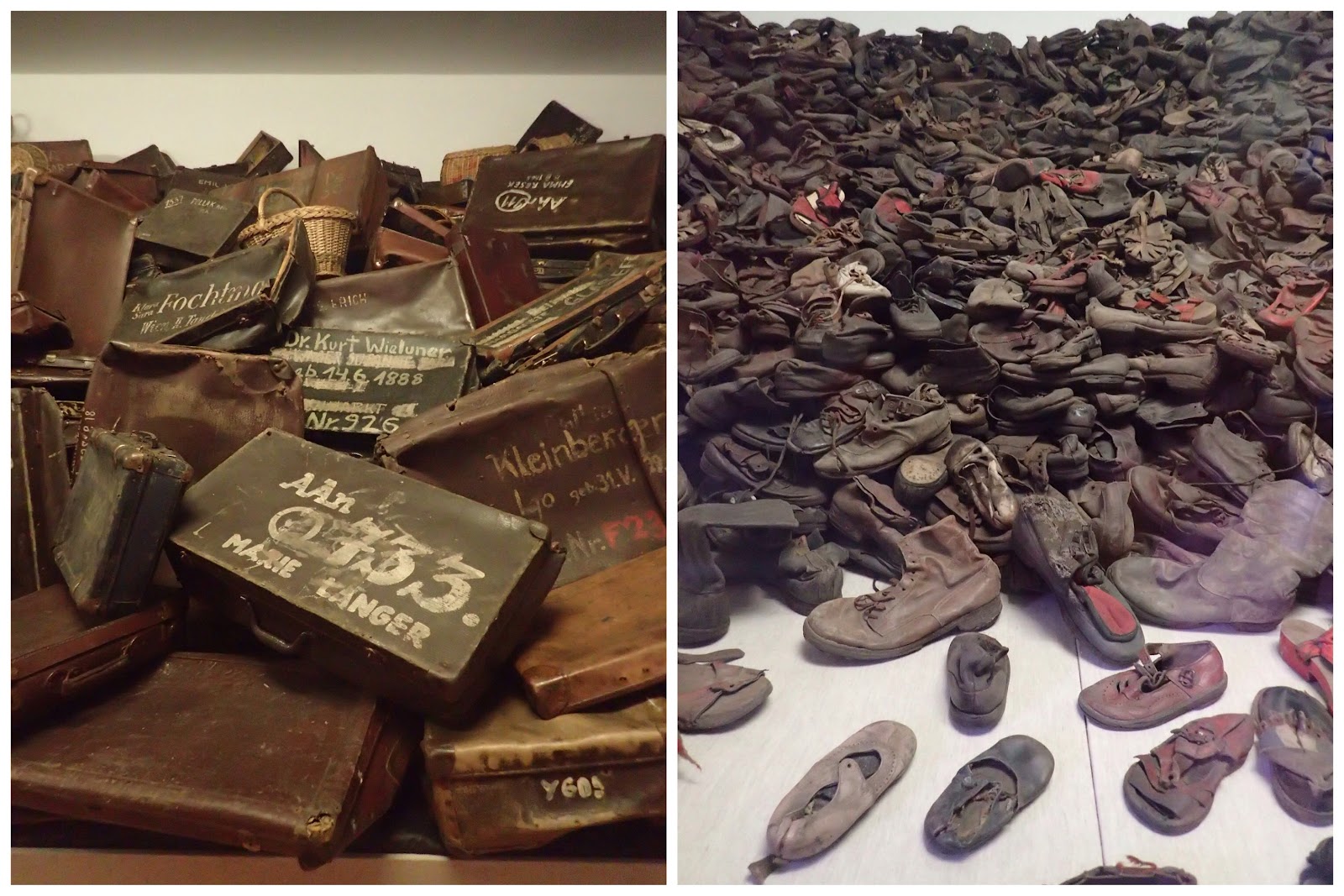
It's obviously not an experience that's easy to write about, nor one I'm going to attempt. It is a place that every person should visit if they're able, but likely one time will be enough. The 28 blocks or barracks have mostly been converted to museums, with exhibits of pre-war Jewish traditions, memorials to Jews from various countries, and some blocks that contained the living quarters as they were during the Holocaust. One of the more powerful blocks contained the victim's possessions- from the suitcases they entered the concentration camp with to their hair after they were murdered in the gas chamber- that the Nazis weren't able to destroy before being found. Walking through the gas chambers that still have holes where the Zyklon B canisters were dropped and seeing the crematorium in the next room made all of the stories I've read and heard much more real.

The entrance to Auschwitz I


Railroad tracks that would take prisoners into Birkenau, Auschwitz II.

The Nazis burned most of Birkenau down to hide the evidence, but a few buildings, and many chimneys, remain.
Side note for Auschwitz: I can see where a guide would be beneficial, although we felt everything was marked and explained well enough without a guide. We spent 3 hours at Auschwitz I, took the free shuttle to Birkenau (Auschwitz II), and had an hour there to walk around the camp without too many stops inside. We were told to allot 4-6 hours at Auschwitz, which is an accurate range.

Other helpful traveling tips:
Kraków Food
Our hotel provided breakfast, which was a convenient change from recent lodgings. Sunday and Monday mornings, we packed our tummies as full as we were able, since we're on the 2 meal per day backpacker diet. Tuesday we left for Auschwitz at 6:15, which was earlier than breakfast was served, so we forfeited it. If we don't count our yogurt dinner from the first night, this gave us two chances to locate typical Polish food. Sunday night we found Morskie Oko, the 3rd best Polish restaurant in Kraków and stood outside in line for 25 minutes. We were seated upstairs in a eclectic, traditionally decorated restaurant that included a live Folk band. We're basing that on the music we heard and not what we saw, since they wisely decided to not venture up the spiral staircase to our floor. To start our meal, we both ordered hot tea with a shot of cherry or honey vodka. This was in an effort to stall the colds we felt coming on, and I believe it worked. After bacon wrapped prunes, our main course was lamb dumplings in a mushroom sauce and beef stew over potato pancakes. The restaurant was fantastic and we would recommend it, based on food and ambience, but avoid the 3rd floor; it's 10 degrees warmer than everywhere else.


Monday evening, we walked from our home in the general direction of the town square. We settled on food carts advertising kebabs, which seems to be Eastern Europe's street food of choice. On our walk home, we picked up baked goods and bananas for our early departure the next morning.

Public transit
Another obstacle in Krakòw that we felt was a bit difficult to navigate. The public transit itself was lovely- trams were frequent and clean. However we were never able to give them money. Our first ride, the machine that dispensed tickets once you tapped it with your credit card didn't work. A man told us we could pay on the train, so we boarded with the many other people we assumed didn't pay. We didn't see a machine on the train but rode home anyway. For our second attempt, we planned to use the machine that we had in fact seen inside the trains as they zoomed by. However, the machine didn't take a credit card and we didn't have appropriate change. So at every stop, we leaned out the sliding doors, ensured there was no uniformed officer boarding the train to check tickets, and rode for free again. Not an accomplishment we'd brag about, but we felt we did everything we could to give them our money.

Moving on from Poland. Tuesday after we spent 4+ hours at Auschwitz, we spent 5 hours in Naida the Rental car, driving very fast on express ways. We've become accustomed to the metric system and the speed limits in Europe. What we haven't gotten a grasp on is knowing the speed limit changes without signs indicating. Each time we enter a new country, there's a large sign with the important road rules, including the speed limit in developed areas, highways and expressways. Apparently, this is enough to these countries, and they don't always tell you when you're entering a developed area, or when you've left it and the speed limit has increased. Needless to say, I was driving on the fast expressway, generally 130 km/h, when Micah made a strange noise as the passenger. I had just switched lanes to give space to a semi who was merging, and assumed that Micah had mumbled for that reason. Turns out, his noise was because there was a police officer van pulled over on the side of the road and they just pulled onto the road. I slowed down, prayed the speed limit was 130 and not 110, nervously checked my rear view mirror every 2 seconds, and briefly wondered if my last name could get me out of a speeding ticket in Czech. I could also see the driver of the vehicle behind me constantly checking his rear view mirror. The police van stayed behind us, then eventually pulled in front of the car that was behind me. I was in the next lane so I felt safe, but kept my eyes on the van. It did end up pulling over the car that had been behind me, but it did so by driving in front of him, turning its lights on, and an electric reader board on the back of the van scrolled the words "Police Stop". There are many reasons I'm thankful I didn't get pulled over, but the biggest may be that I wouldn't have known I was being pulled over and we likely would have ended up in jail for evading a police officer.
Unscathed, we arrived at our AirBnB rental in Prague. After a slight miscommunication, we had the keys to our riverside flat and our car was safely parked behind the building. We walked to the end of the block to eat dinner at a local pub restaurant. Our day had felt long and draining, and all we wanted was a quick bite, start some laundry, and sleep for at least 9 hours. We ordered drinks and food from our waitress who knew a little English, and received our drinks right away. After 45 minutes and no food, we began to perk up every time a plate of food came out of the kitchen. An hour after ordering, our waitress walked over, looked puzzled, and asked if we'd eaten. We told her the food we'd ordered had never come, and after a few words of clarification, it was understood that she forgot to place the order. Our food arrived 20 minutes later with multiple apologies, we ate quickly, then retreated to our flat to start laundry and sleep.
As we have mentioned a few times, Czech, and Prague especially, was one of our three destinations for our honeymoon. The reason for this is simple- my family comes from Czech. I won't go into too much ancestry detail, so that I don't bore you, but mostly because I don't know very much. What I do know is that my paternal Grandfather's side of the family is of Czech descent, and that includes my great great great great (I think 4 is right) Uncle Bedrich Smetana. Bedrich lived from 1824-1884 and during his life he became a very well known Czech classical composer. He pioneered a style of music that reflected the country's aspirations for independence at that time. He is regarded in his homeland as the father of Czech music. Our plans while visiting Prague all included him, and finding every statue and building we could with the name Smetana written on its walls.
Wednesday morning we took our time getting out of the house. The tram stop was directly in front of our home, so we jumped on and rode to the center of Prague. We explored the town square, and then found a mediocre meal inside a small pub and each had a Czech beer since it was just after noon. Then we began our Smetana tour. Our first stop was the Bedrich Smetana museum which included posing by the statue of him in front of the museum. We spent an hour inside the museum, and especially enjoyed the family tree (they forgot to include me) and the reminders of all he accomplished. I had known that he gradually become deaf during the last decade of his life, but I didn't realize this was when he completed the majority of his most accomplished pieces.


We walked across the iconic Charles Bridge and climbed the stairs to Prague Castle. The castle grounds were massive and felt like an entire medieval community. It was free to enter and despite how many tourists were there at the same time, it didn't feel crowded. We walked from the west end to the east end and then made our way back down the cobbled streets after soaking in the view of the city.

View from Charles Bridge 

View of Charles Bridge

Finding photo opportunities on our way up the stairs to the castle


Entrance to Prague Castle


That evening, we made our way back towards the Old Town Square, Staromêstske námêstí. Unfortunately the Astronomical Clock was under renovation but we made the best of the famous square by gathering with a group of fans around a few singers. After a few minutes, we picked one of the narrow alleys leading away from the square, walked through the Jewish neighborhood, and ended up at the Municipal House. Inside the art nouveau building is the Smetana Hall, a popular venue for classical music concerts. The Smetana Hall was also the site of the Independent Czechoslovak Republic declaration in 1918. We were unable to view the hall though, since there was a concert starting in a few minutes.

Left: Church of Our Lady before Tyn standing in the background to a small concert. Right: Municipal House

We finished off the evening with a delicious dinner followed by gelato. We headed back towards the tram, in search of an automated ticket machine to buy tickets. We were not successful and walked nearly half the distance to our place while looking. Still feeling a bit guilty for not paying in Kraków and imagining we couldn't get away with it three times, we eventually found the machine and hopped on the tram for a short ride home.
Thursday morning we set off walking from our rental towards Vyšehrad Citadel. Purposefully different than a castle, a citadel is similar in that it is a structure built on a raised height. We had brunch just outside the gates, and watched people meander into the large grounds, casually talking with their lunch buddy as if this was a part of their daily routine. How wonderful it must be to enjoy those views and that peacefulness on a lunch break from work.
Our first stop in Vyšehrad was the cemetery, where the country's "cultural giants" are buried. We paid our respects to my Gx4 Uncle and listened to a Spanish speaking tour guide talk about him with his group. Dvorak and a few other recognizable names were found on tombstones as we wandered around. We've seen many cemeteries in our travels, and without a doubt, this was the most ornate and beautiful cemetery we've ever visited.

Left: Bedrich's grave


The Basilica of St Peter and St Paul in Vyšehrad Citadel

View from the Citadel

After walking the perimeter of the Citadel, we returned home to clean up. We had tickets for a classical music concert at St George's Basilica inside the Prague Castle at 17:30. Dressed in our best outfits, we sat in the pew of the oldest surviving church building within the castle grounds. The music was performed by Old Prague Music Ensemble and included a soprano singer. They began the 60 minute concert with Smetana's Vltava and played numerous other recognizable pieces, including Pachelbel's Canon in D, which my Dad and I walked down the aisle to almost a year ago. The concert was $60 well spent (for both tickets) and was a refreshing change from our usual travel activities.

St Vitus Cathedral in Prague Castle

Inside St George's Basilica

It felt appropriate to spend our last evening in Prague at Letna Beer Gardens, a popular spot to grab a beer and enjoy iconic views of Prague while sitting at a picnic table under a grove of chestnut trees. We had a variety of beers and ate kebabs from the only food cart in the beer garden. Took a few photos in the beautiful night lights of Prague and then caught the tram back to our flat.


Until next time, remember: Bez peněz do hospody nelez.